Digital Forensics & Cyber Investigation Services | Cyberexy

Digital Forensics & Cyber Investigation Services | Cyberexy
Are you dealing with a cybersecurity incident, suspected data breach, suspicious system activity, or a digital investigation? Cyberexy provides professional digital forensics, computer forensics, malware analysis, log analysis, incident response, data recovery, and forensic reporting support for authorised investigations and security projects.
With a strong background in Cybersecurity and Digital Forensics and hands-on experience with forensic and security technologies, Cyberexy focuses on helping clients understand digital evidence, investigate security incidents, analyse relevant artefacts, and document findings clearly.
Whether you need support with a digital forensics investigation, computer forensics project, forensic lab, incident analysis, or technical report, the approach is based on structured investigation methods, evidence preservation, technical analysis, and professional documentation.
Digital Forensics and Computer Forensics
Digital forensics involves the systematic examination of digital devices, storage media, system artefacts, and other sources of electronic evidence.
Cyberexy provides guidance and technical support for authorised forensic investigations involving areas such as:
- Computer and digital forensics
- Disk and filesystem analysis
- Digital evidence examination
- Deleted-file analysis
- Windows and Linux artefacts
- Browser and application artefacts
- Timeline analysis
- Log analysis
- Incident investigation
- Forensic documentation and reporting
The investigation process should maintain appropriate evidence-handling procedures and preserve the integrity of relevant evidence.
Cyber Investigation and Incident Analysis
Security incidents can leave evidence across operating systems, applications, network infrastructure, logs, and endpoint devices.
Cyberexy can support authorised investigations involving:
- Suspicious system activity
- Unauthorised access investigations
- Malware incidents
- Phishing-related incidents
- Data breach analysis
- Account compromise investigations
- Security log analysis
- Incident timelines
- Indicators of compromise
- Threat investigation
The objective is to help establish what happened, when it happened, what systems or artefacts were involved, and what evidence supports the findings.
Malware and Log Analysis
Malware incidents can generate valuable forensic evidence across files, processes, event logs, network activity, and system configurations.
Cyberexy provides technical support for malware analysis and security log investigation, including the examination of relevant indicators and artefacts.
Log analysis may involve reviewing:
- Authentication events
- System events
- Network activity
- Application logs
- Security alerts
- Endpoint activity
- Suspicious processes
- File activity
- Indicators of compromise
The findings can then be documented in a structured technical report.
Data Recovery and Disk Analysis
Digital storage devices may contain important information even when files have been deleted or systems have experienced an incident.
For authorised forensic work, Cyberexy can provide guidance related to:
- Disk image analysis
- Filesystem examination
- Deleted-file analysis
- Partition analysis
- File metadata
- Evidence extraction
- Timeline reconstruction
- Storage media investigation
Forensic analysis should be conducted using appropriate procedures to avoid unnecessarily altering the original evidence.
Digital Forensics Labs and Practical Projects
Digital forensics education often involves practical laboratories where students learn how to examine forensic images, identify artefacts, analyse evidence, and document their findings.
Cyberexy can provide learning-focused guidance for computer forensics and cybersecurity labs, including explanations of:
- Evidence identification
- Evidence preservation concepts
- Disk image examination
- Filesystem analysis
- Windows artefact analysis
- Network evidence
- Log analysis
- Timeline creation
- Forensic tools and workflows
- Technical report preparation
The focus is on understanding the forensic methodology and learning how the tools and techniques work.
Professional Forensic Reports
A forensic investigation requires clear documentation. A professional report should explain the investigation methodology, evidence examined, relevant findings, limitations, and conclusions without overstating what the evidence proves.
Depending on the investigation, a forensic report may contain:
- Executive summary
- Investigation objectives
- Scope and limitations
- Evidence description
- Evidence-handling methodology
- Tools and techniques
- Examination methodology
- Findings
- Timeline of relevant events
- Supporting evidence
- Indicators of compromise
- Analysis and interpretation
- Recommendations
- Conclusion
Where legal or regulatory proceedings are involved, reports and evidence handling should follow the applicable organisational, legal, and forensic requirements. Cyberexy does not represent that every report is automatically legally admissible.
Digital Forensics Tools and Technologies
Cyberexy works with a range of recognised forensic and cybersecurity technologies, depending on the authorised investigation and technical environment.
Forensic Tools
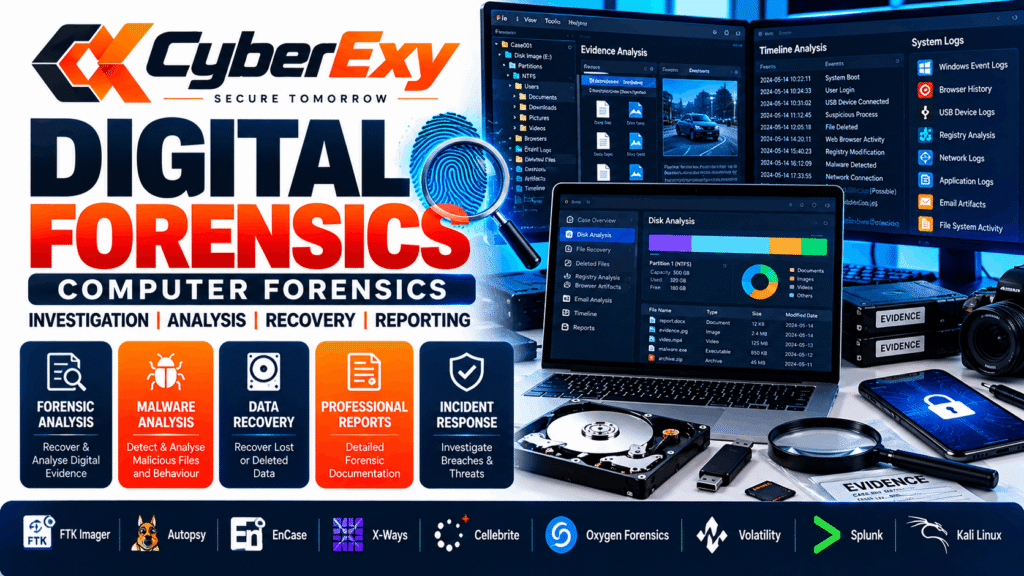
FTK Imager, Autopsy, EnCase, X-Ways, Cellebrite, Oxygen Forensics, and Volatility may be used where appropriate.
Security and Analysis Tools
Splunk, Wireshark, Kali Linux, and other security analysis technologies can support specific investigative requirements.
The selection of tools depends on the evidence source, operating system, investigation objectives, and authorised scope.
Why Choose Cyberexy?
Cyberexy combines cybersecurity knowledge with digital forensic methodologies and professional technical reporting.
Key priorities include:
- Digital forensics expertise
- Structured investigation methodology
- Evidence-focused analysis
- Confidential project handling
- Clear technical documentation
- Detailed forensic reporting
- Practical recommendations
- Professional communication
- Authorised and ethical investigations
Every investigation should begin with clearly defined objectives, scope, permissions, and evidence-handling requirements.
Get Professional Digital Forensics Support
Whether you need assistance with an authorised digital forensics investigation, computer forensics project, cybersecurity lab, incident analysis, malware investigation, log analysis, or forensic report, Cyberexy can provide structured technical guidance and documentation support.
Cyberexy focuses on turning complex digital evidence and technical findings into clear, organised, and evidence-based reports that help clients better understand security incidents and investigative outcomes.
Contact Cyberexy
WhatsApp: +31 97796960
Fiverr: Cyberexy on Fiverr
Services: Digital Forensics | Computer Forensics | Incident Response | Malware Analysis | Log Analysis | Data Recovery | Forensic Reporting
Please contact Cyberexy before starting an investigation or project so the scope, objectives, authorisation, evidence requirements, and expected deliverables can be clearly discussed.