Study in the UK Without IELTS 2027: Universities & MOI Guide

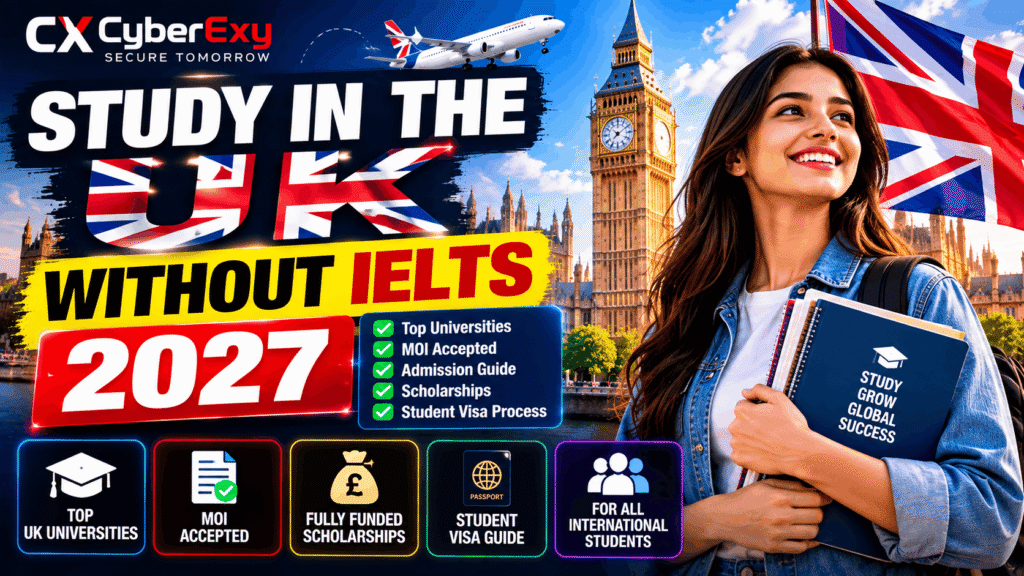
Study in the UK Without IELTS 2027: Universities, MOI Certificate and Scholarships
Are you planning to study in the UK without IELTS in 2027? International students can explore several English-language alternatives when applying to British universities, including Medium of Instruction (MOI) certificates, university-administered English assessments and alternative language tests. However, acceptance depends on the university, course, academic background and applicable student visa requirements.
The United Kingdom offers undergraduate, postgraduate and research programmes across a wide range of disciplines. By understanding university admission policies, preparing the correct documents and checking official immigration guidance, students can identify suitable options without assuming IELTS is compulsory for every application.
This guide explains how to apply, which universities to investigate, how MOI certificates work and where to find legitimate scholarship opportunities for the 2027 academic year.
Can You Study in the UK Without IELTS in 2027?
Yes, some students can gain admission to UK universities without taking IELTS. Universities establish their own English-language requirements and may accept other forms of evidence.
Possible alternatives include:
- Medium of Instruction (MOI) certificate: Evidence from a previous institution that your education was delivered in English.
- Previous academic qualifications: Certain English-language qualifications may satisfy a university’s requirements.
- University English assessment: An interview, internal test or other assessment accepted by the institution.
- Alternative English tests: Some universities accept tests such as PTE Academic, TOEFL iBT, Duolingo English Test or Cambridge English qualifications.
- Pre-sessional English courses: An approved preparatory course may provide a pathway to a degree programme.
Not every university accepts every alternative. Always check the exact course page and obtain confirmation from the admissions team before applying.
What Is an MOI Certificate?
A Medium of Instruction certificate is an official document issued by your school, college or university confirming the language used to teach your previous qualification.
Students whose degrees were taught in English may be able to use an MOI certificate to support a university application. Acceptance depends on the institution’s policy, the qualification completed and the programme’s English-language requirements.
How to obtain an MOI letter
- Contact your previous institution’s examination office, registrar or student administration department.
- Request an official certificate confirming the language of instruction.
- Ensure it includes your name, qualification, dates of study and the institution’s official details.
- Obtain the required signature, stamp or verification.
- Submit the document with your academic transcripts and other application materials.
An MOI letter does not automatically replace IELTS at every university, and it does not automatically satisfy UK Student visa requirements. For overseas degrees used as immigration evidence, additional qualification verification may be necessary.
UK Universities to Investigate for IELTS Alternatives
International applicants can investigate English-language policies at the following universities. This is a research shortlist, not a guarantee that every institution or course accepts MOI certificates or waives IELTS for the 2027 intake.
| University | Official website |
|---|---|
| University of Portsmouth | port.ac.uk |
| University of Greenwich | gre.ac.uk |
| Northumbria University | northumbria.ac.uk |
| University of Plymouth | plymouth.ac.uk |
| Teesside University | tees.ac.uk |
| University of Hertfordshire | herts.ac.uk |
| Coventry University | coventry.ac.uk |
| Birmingham City University | bcu.ac.uk |
| Aston University | aston.ac.uk |
| University of Surrey | surrey.ac.uk |
Visit the international admissions and English-language requirements sections of each website. Ask whether your specific qualification and MOI certificate can be accepted for your intended course and intake.
UK Student Visa Requirements Without IELTS
University admission and immigration are two separate processes. Receiving an offer without IELTS does not mean every student automatically qualifies for a UK Student visa.
According to the official UK Government English-language guidance, eligible higher education providers can assess English proficiency themselves for degree-level study, subject to the applicable rules. Where the English-language requirement applies, the required level is generally CEFR B2 for degree-level study and B1 for courses below degree level.
Students should also prepare for the other visa requirements, which may include:
- A Confirmation of Acceptance for Studies (CAS) from a licensed student sponsor.
- A valid passport.
- Evidence of funds meeting the applicable requirements.
- Payment of the visa application fee and Immigration Health Surcharge, where applicable.
- Documents required for the individual application.
- Any additional evidence requested by UK Visas and Immigration.
Check the latest rules on the official UK Student visa page before submitting an application.
Alternative English Tests Accepted by Some Universities
If your preferred university does not accept your MOI certificate, investigate other English-language options.
PTE Academic: A computer-based test accepted by many institutions, subject to course-specific requirements.
TOEFL iBT: An established English-language test that some universities accept as an alternative to IELTS.
Duolingo English Test: Accepted by certain institutions and programmes, but not universally accepted for every course or immigration route.
Cambridge English qualifications: Some universities recognise specific Cambridge qualifications and scores.
Before booking any test, check the required scores, test format, validity period and whether the university requires a particular approved test for visa purposes.
UK Scholarships for International Students in 2027
International students can investigate government-funded scholarships, university awards and subject-specific funding opportunities. Scholarship eligibility, coverage and deadlines differ by programme.
Chevening Scholarships
Chevening supports eligible applicants pursuing postgraduate study in the UK. Its 2027–2028 application deadline was 6 October 2026, so that application window has passed. Check the official Chevening website for future cycles and current eligibility information.
Commonwealth Scholarships
The Commonwealth Scholarship Commission offers funding for eligible candidates from qualifying Commonwealth countries. The published deadline for the 2027–2028 Commonwealth Master’s Scholarship cycle was 20 October 2026, which has also passed. Consult the official Commonwealth Scholarship Commission website for other opportunities and future application dates.
GREAT Scholarships
The GREAT Scholarships programme provides funding opportunities at participating UK universities for eligible students from selected countries. Award amounts, participating institutions and application deadlines vary. Check the British Council’s official GREAT Scholarships page for the latest information.
Important: A scholarship is not automatically fully funded. Confirm whether it covers tuition, living costs, travel or only part of the fees. Never rely on an old deadline or an unofficial scholarship advertisement.
Step-by-Step Application Process for the 2027 Intake
Step 1: Choose your course. Decide whether you want an undergraduate degree, master’s programme or research qualification.
Step 2: Shortlist universities. Compare entry requirements, tuition fees, course content and English-language policies.
Step 3: Confirm IELTS alternatives. Ask the admissions team whether an MOI certificate, previous qualification or alternative test will be accepted.
Step 4: Prepare your documents. Gather your transcripts, degree certificates, passport, personal statement and references where required.
Step 5: Submit your application. Apply through the university’s official portal or UCAS where applicable.
Step 6: Review your offer. Check whether it is conditional or unconditional and understand any outstanding academic or language requirements.
Step 7: Arrange funding. Review tuition fees, living costs, available scholarships and the financial evidence required for a visa.
Step 8: Apply for your Student visa. Follow the official requirements after receiving the necessary university sponsorship and CAS.
Start early because course deadlines, scholarship dates and document processing times vary.
Frequently Asked Questions
Is IELTS compulsory for all UK universities?
No. Some universities and courses accept other evidence of English proficiency, but policies vary. Verify the requirements for your exact programme.
Is an MOI certificate enough for a UK Student visa?
Not automatically. The university may accept an MOI for admission, while the visa application must separately meet the applicable immigration rules. For certain overseas degrees, Ecctis assessment may be required.
Can I apply for a UK master’s degree without IELTS?
Yes, some master’s programmes accept alternatives to IELTS. Your previous education, English-language evidence and the university’s policy will determine your eligibility.
Can I get a fully funded UK scholarship in 2027?
Potentially, if you meet the eligibility criteria and apply during an available funding cycle. Scholarship coverage and deadlines differ, and some deadlines for the 2027–2028 cycle have already passed.
Conclusion
Studying in the UK without IELTS in 2027 may be possible if your chosen university accepts an alternative way to demonstrate English proficiency. MOI certificates, university assessments and alternative tests can provide options for eligible students, but none is accepted universally.
Research university policies carefully, confirm the English-language requirements in writing and distinguish university admission rules from UK Student visa rules. For scholarships, use official funding websites and check deadlines before preparing an application.
Start with the UK Government Student visa guidance, your chosen university’s official admissions page and the British Council Study UK website.
Disclaimer: Admission, English-language waivers, scholarships and visa decisions depend on individual eligibility and current institutional or government rules. Always verify details with official sources before paying application or advisory fees.
Official Resources