Sigma 12.0 by Apna College: DSA, Development & Placements

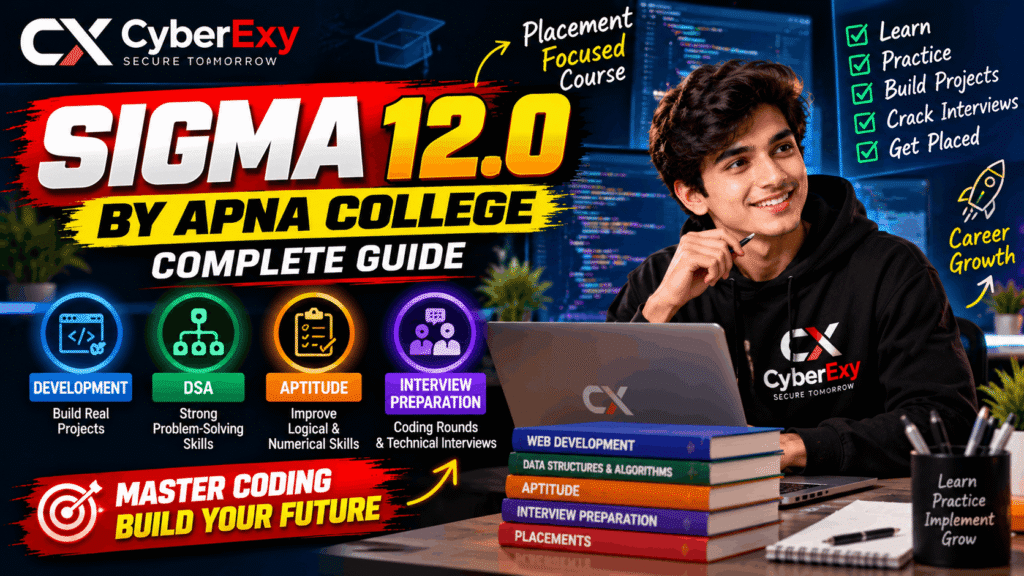
Sigma 12.0 by Apna College: Complete Guide to Development, DSA and Placement Preparation
Learning programming is an important step towards building a career in software development. However, becoming job-ready requires more than understanding programming syntax. Students also need problem-solving skills, practical development experience, Data Structures and Algorithms (DSA), aptitude preparation, and confidence in technical interviews.
Sigma 12.0 by Apna College is presented as a structured, placement-focused learning programme designed to help students strengthen these skills. It focuses on development, DSA, aptitude, coding practice, and preparation for technical interviews and placement opportunities.
In this guide, we explore the course’s stated learning objectives, who may benefit from it, how to approach the learning process, and how students can use a structured study plan to improve their technical skills.
What Is Sigma 12.0 by Apna College?
Sigma 12.0 is described as a placement-focused course for learners who want to develop their programming knowledge and prepare for software development opportunities. Its stated focus includes development, Data Structures and Algorithms, aptitude, coding, and interview preparation.
A structured course can help students organise their learning instead of jumping between unrelated tutorials. Following a planned learning path also makes it easier to identify knowledge gaps, revise difficult topics, and practise consistently.
Students should check Apna College’s official channels for the latest syllabus, prerequisites, course format, pricing, and enrolment details, as these specifics are not confirmed by the course description provided here.
What Will You Learn in Sigma 12.0?
1. Development Skills
Software development involves designing, building, testing, and maintaining applications. Learning development helps students understand how programming concepts can be applied to practical problems.
An effective learning routine includes writing code independently, debugging errors, understanding how different components work together, and building projects that demonstrate practical skills.
Students should focus on understanding the purpose of the code they write rather than copying examples without understanding them. Small projects can provide valuable practice and help learners demonstrate their abilities when applying for internships or entry-level jobs.
The exact programming languages, frameworks, and development technologies included in Sigma 12.0 should be verified against its current syllabus.
2. Data Structures and Algorithms (DSA)
Data Structures and Algorithms are important parts of computer science and technical recruitment. Data structures organise information, while algorithms define the steps used to solve computational problems.
Students preparing for coding interviews should develop a strong understanding of the concepts included in their study plan. Depending on the syllabus, these may include arrays, strings, searching, sorting, recursion, linked lists, stacks, queues, trees, graphs, and related problem-solving techniques.
Consistent practice is more useful than simply memorising solutions. When solving a problem, try to understand the requirements, develop a logical approach, write the code, test different cases, and analyse its time and space complexity where relevant.
3. Aptitude and Logical Reasoning
Many recruitment processes include aptitude tests alongside technical assessments. These tests may evaluate numerical reasoning, logical thinking, pattern recognition, and time management.
Students can prepare by practising questions regularly, reviewing incorrect answers, and identifying topics that require additional attention.
Timed practice can help learners become more comfortable with assessment conditions. However, accuracy and understanding should come before speed, particularly when learning a new topic.
4. Coding Practice and Technical Interviews
Technical interviews often evaluate how candidates approach unfamiliar problems, explain their reasoning, and write understandable code.
Students can improve these skills by solving coding problems independently and explaining their approach aloud. They should also practise discussing the trade-offs between different solutions and identifying possible edge cases.
Project discussions are another important part of many interviews. Learners should understand the technologies used in their projects, the decisions they made, the problems they encountered, and how they resolved them.
Sigma 12.0 is described as supporting placement preparation, but students should confirm the exact interview-preparation resources included in the course.
Who Should Consider Sigma 12.0?
The course may be worth exploring for:
- College students: Those preparing for campus recruitment and internships.
- Programming beginners: Learners looking for a more structured approach to development.
- DSA learners: Students who want to improve coding and problem-solving skills.
- Self-learners: People who benefit from following a planned study routine.
- Placement candidates: Students preparing for coding assessments and technical interviews.
Before starting, check the prerequisites to determine whether the course matches your current programming knowledge and learning goals.
How to Study Effectively Alongside the Course
Following lessons is only one part of learning. Students should combine course material with practical coding, revision, and independent projects.
Step 1: Create a realistic study schedule. Set aside regular time for learning concepts, practising problems, and revising previous lessons.
Step 2: Write code independently. Pause lessons when necessary and try implementing the concept yourself before checking the example solution.
Step 3: Maintain revision notes. Record important concepts, common mistakes, useful patterns, and questions that you want to revisit.
Step 4: Practise problem-solving regularly. Start with manageable exercises and gradually move towards more challenging problems as your understanding improves.
Step 5: Build practical projects. Apply development concepts to small applications that you can explain clearly.
Step 6: Review your progress. Track completed topics, coding exercises, projects, and areas that still need improvement.
Step 7: Prepare for interviews. Practise explaining your reasoning, discussing project decisions, and solving unfamiliar problems without immediately checking a solution.
A consistent routine can help students make better use of their learning time and develop more independent problem-solving skills.
How to Access Sigma 12.0 Course Resources
The following Google Drive folder was shared as the course resource for this article:

Access may depend on the folder’s sharing permissions. Confirm that the materials are shared by an authorised source and that you have permission to use them. For official course information, consult Apna College’s official website or verified channels.
Frequently Asked Questions
What is Sigma 12.0 by Apna College?
It is described as a placement-focused learning programme covering development, DSA, aptitude, coding practice, and technical interview preparation.
Is Sigma 12.0 suitable for beginners?
It may suit beginners seeking structured learning, but suitability depends on the course prerequisites and syllabus. Review these details before starting.
Does the course guarantee a job or placement?
No course can guarantee employment. Outcomes depend on a learner’s skills, practice, qualifications, interview performance, and available opportunities.
Does Sigma 12.0 provide a certificate?
The information provided does not confirm certificate availability. Check the current official course details for confirmation.
What should students focus on after completing the lessons?
Students should practise coding independently, revise DSA concepts, build projects, and prepare to explain their technical decisions during interviews.
Conclusion
Sigma 12.0 by Apna College is presented as a structured learning option for students who want to improve their development, DSA, aptitude, and placement preparation skills.
The greatest benefit of any programming course comes from applying what you learn. Combine lessons with independent coding, practical projects, revision, and interview practice to build a stronger technical foundation.
Before accessing the course, verify the current syllabus, availability, and terms through authorised sources. With consistent effort and realistic goals, learners can make meaningful progress towards preparing for software development opportunities.