
Fully Funded Italian Scholarships 2026-27: Study in Italy

Fully Funded Italian Scholarships 2026-27 | Study Free in Italy
Are you dreaming of studying in Europe without paying expensive university tuition fees? Fully funded Italian scholarships for 2026–27 offer international students opportunities to pursue bachelor’s, master’s, and PhD degrees at some of Europe’s respected universities.
Italy has become an attractive destination for international students because of its public universities, English-taught degree programmes, research opportunities, cultural heritage, and scholarship schemes.
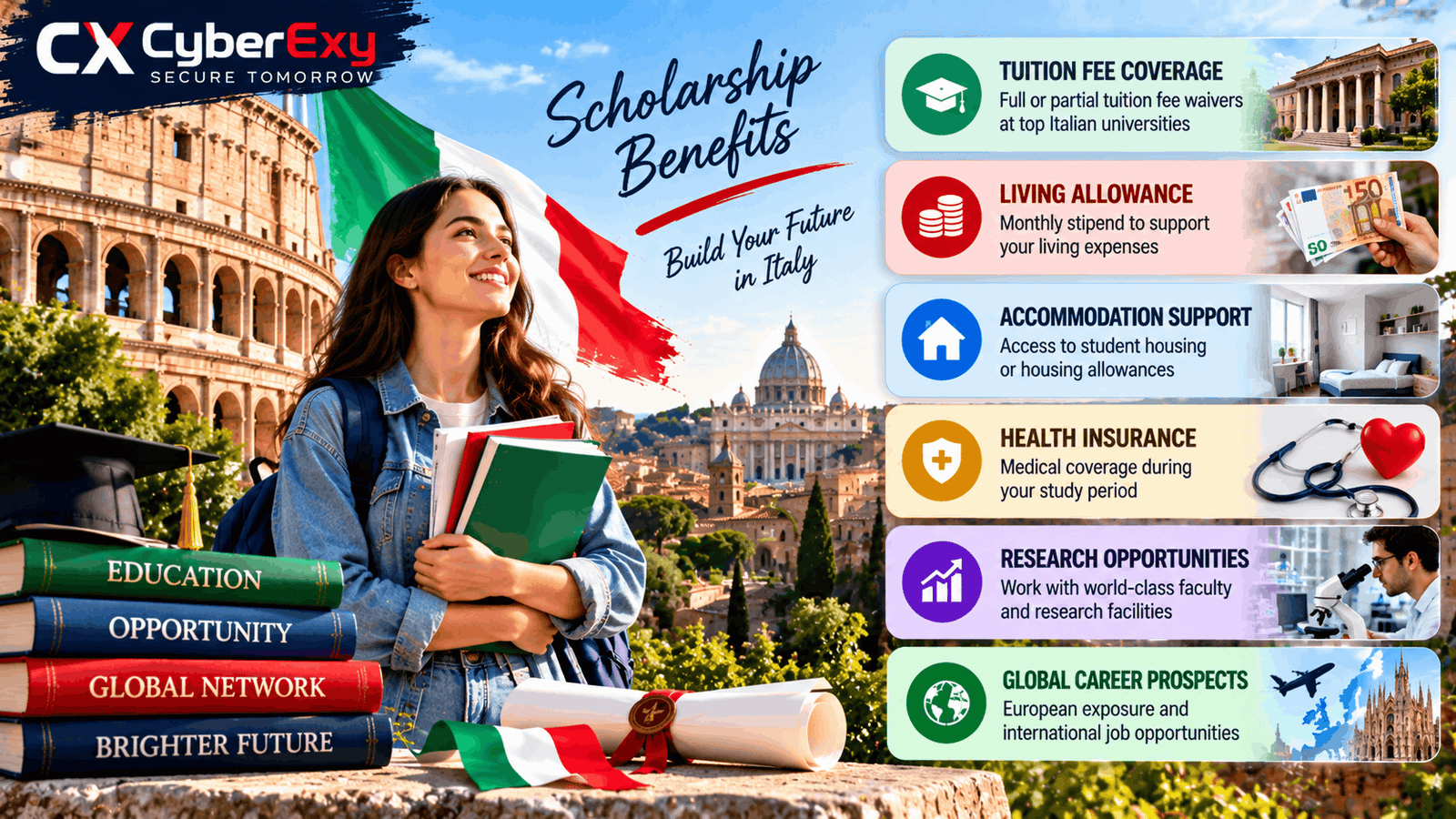
Several Italian government, university, and regional scholarship programmes provide financial assistance through tuition fee exemptions, living allowances, accommodation support, and other benefits.
However, scholarship coverage and eligibility vary significantly. Not every award is fully funded, and students must check the conditions before applying.
This comprehensive guide explains the major Italian scholarships, eligibility requirements, application procedures, university options, financial benefits, and official application websites.
Fully Funded Italian Scholarships 2026-27: Overview
| Scholarship details | Information |
|---|---|
| Host country | Italy |
| Academic year | 2026–2027 |
| Degree levels | Bachelor’s, Master’s, PhD |
| Universities | Italian public and participating private universities |
| Scholarship types | Government, university, regional, research |
| Financial coverage | Full or partial, depending on award |
| Eligible nationalities | International students, subject to individual criteria |
| Language requirements | English or Italian, depending on programme |
| Application method | Online |
| Application deadlines | Vary by university and scholarship |
Why Study in Italy in 2026-27?
Italy offers an excellent combination of academic opportunities, cultural experiences, and comparatively affordable higher education.
International students can explore degree programmes in engineering, computer science, cybersecurity, medicine, architecture, economics, business administration, environmental sciences, and humanities.
Some of the major advantages include:
- Internationally recognised universities and research institutions.
- English-taught bachelor’s and master’s degree programmes.
- Government and regional scholarship opportunities.
- Potential tuition fee exemptions and financial assistance.
- Opportunities for international research collaboration.
- Access to Italy’s cultural and historical heritage.
- Opportunities to explore eligible employment pathways after graduation.
Universities such as the University of Bologna, University of Padua, University of Milan, Sapienza University of Rome, and University of Pisa attract students from around the world.
Top Fully Funded Italian Scholarships for International Students
1. Italian Government Scholarships (MAECI)
The Italian Ministry of Foreign Affairs and International Cooperation offers scholarships to eligible international students through its MAECI scholarship programme.
These scholarships are designed to support international academic cooperation and promote Italian higher education.
Potential scholarship benefits:
- Financial grants for eligible study or research periods.
- Health and medical insurance arrangements specified by the award.
- Possible tuition fee exemptions, subject to institutional rules.
- Access to eligible Italian higher education institutions.
Government scholarships generally focus on selected postgraduate, research, and specialised programmes rather than automatically covering every bachelor’s degree.
Eligibility depends on nationality, academic qualifications, age limits, language proficiency, and the specific annual call.
Official website: https://studyinitaly.esteri.it/
2. University of Bologna Scholarships
The University of Bologna is one of Europe’s oldest universities and offers a broad range of academic programmes.
International students can explore university-funded financial assistance and eligible regional scholarship opportunities.
Depending on the award, benefits may include tuition support, financial grants, or assistance with living expenses.
Popular study fields:
- Computer Science
- Engineering
- Economics
- Business Administration
- International Relations
- Biotechnology
Official website: https://www.unibo.it/en
3. University of Padua Scholarships
The University of Padua offers international degree programmes and scholarship opportunities for eligible applicants.
Its international excellence scholarship initiatives have historically supported highly qualified students entering selected English-taught degree programmes.
Scholarship benefits, availability, and selection conditions must be checked against the relevant academic year’s official call.
Official website: https://www.unipd.it/en/padua-excellence
4. University of Milan Scholarships
The University of Milan provides opportunities for international students across scientific, technological, medical, and humanities disciplines.
Students can investigate merit-based awards, university financial aid, and regional right-to-study schemes.
Some awards reduce tuition expenses, while others may provide additional financial support.
Official website: https://www.unimi.it/en
5. University of Pisa Scholarships
The University of Pisa offers international academic programmes and access to scholarship and financial assistance opportunities.
Students may explore regional financial aid and institution-specific funding according to their degree level and eligibility.
Official website: https://www.unipi.it/en
6. Sapienza University of Rome Scholarships
Sapienza University of Rome offers a wide range of degree programmes and opportunities for international students.
Scholarship availability depends on the programme, funding source, academic performance, and sometimes household financial circumstances.
Official website: https://www.uniroma1.it/en
7. Ca’ Foscari University of Venice Scholarships
Ca’ Foscari University of Venice offers degree programmes in business, economics, languages, environmental sciences, and digital technologies.
Eligible international applicants can investigate university scholarship schemes and available financial aid.
Official website: https://www.unive.it/eng/
8. Regional DSU and Right-to-Study Scholarships
Regional scholarships are particularly important for international students seeking financial assistance in Italy.
These programmes are administered through regional or institutional right-to-study organisations.
Depending on the scheme and student circumstances, support may include:
- Tuition fee reductions or exemptions.
- Accommodation assistance.
- Subsidised meals.
- Financial grants.
- Other student welfare benefits.
Regional scholarships frequently assess household income, assets, and academic progress. International applicants may need officially translated or legalised financial documentation.
Awards are competitive, and benefits are not identical across regions.
Italian Universities Offering Scholarship Opportunities
The following universities are useful starting points for researching admission and financial assistance for 2026–27.
| University | Official website |
|---|---|
| University of Bologna | https://www.unibo.it/en |
| University of Padua | https://www.unipd.it/en |
| University of Pisa | https://www.unipi.it/en |
| University of Turin | https://www.unito.it/ |
| University of Milan | https://www.unimi.it/en |
| University of Verona | https://www.univr.it/en |
| University of Palermo | https://www.unipa.it/ |
| Ca’ Foscari University of Venice | https://www.unive.it/eng/ |
| University of Parma | https://www.unipr.it/en |
| University of Rome Tor Vergata | https://web.uniroma2.it/en |
| University of Messina | https://international.unime.it/ |
| University of Ferrara | https://www.unife.it/en |
| Iuav University of Venice | https://www.iuav.it/ |
| University of Macerata | https://www.unimc.it/en |
| University of Siena | https://www.unisi.it/ |
Important: Inclusion in this table does not mean every university currently offers an open, fully funded scholarship. Applicants should check individual funding announcements.
Eligibility Criteria for Italian Scholarships 2026–27
Eligibility requirements depend on the specific scholarship and university.
Academic Qualifications
For bachelor’s degree programmes, applicants generally need an eligible secondary school qualification.
For master’s programmes, applicants usually need a recognised undergraduate degree in a relevant discipline.
For PhD programmes, applicants generally need an eligible postgraduate qualification or equivalent academic preparation.
Universities may also impose subject-specific admission requirements.
English or Italian Language Proficiency
Students applying for English-taught programmes may need IELTS, TOEFL, or another accepted form of language proficiency evidence.
Some universities accept alternative documentation, such as evidence of previous education in English, when their policies allow it.
For Italian-taught programmes, applicants may need an appropriate Italian language qualification.
There is no universal IELTS score or language waiver applicable to every Italian university.
Nationality Requirements
Italian scholarship programmes may be available to EU and non-EU applicants, although some funding schemes restrict eligibility to particular nationalities or countries.
Government scholarship applicants should check the eligible-country list published in the annual MAECI call.
Academic Merit and Financial Need
Merit-based scholarships commonly consider grades, academic achievements, research potential, and programme-specific selection criteria.
Need-based regional scholarships generally evaluate household financial circumstances alongside other eligibility conditions.
Applicants should determine whether their chosen award is merit-based, need-based, or a combination of both.
Required Documents for Italian Scholarship Applications
Although requirements vary, students should prepare the following documents where applicable:
- Valid passport or accepted identification.
- Academic certificates and transcripts.
- Curriculum vitae or academic résumé.
- Statement of purpose or motivation letter.
- Language proficiency documentation.
- Recommendation letters, if requested.
- Research proposal for relevant postgraduate programmes.
- Financial and household income documentation for need-based awards.
- Official translations or legalisation of documents where required.
- University admission confirmation or application reference, when applicable.
Students should upload documents only through official university or scholarship portals.
How to Apply for Fully Funded Italian Scholarships 2026-27
Step 1: Select Your University and Degree Programme
Start by identifying universities offering your preferred subject.
Compare programme content, language of instruction, admission requirements, tuition fees, and scholarship eligibility.
Step 2: Find the Relevant Scholarship
Check the university’s scholarship page and investigate regional financial assistance programmes.
For Italian government scholarships, consult the official Study in Italy portal.
Step 3: Review the Official Application Deadline
Scholarship and university admission deadlines may be different.
Some students must complete a degree application before applying for financial assistance.
Do not assume that one application automatically covers both admission and funding.
Step 4: Prepare Your Academic Documents
Gather transcripts, degree certificates, identification, language documents, and any required supporting evidence.
Ensure that names and academic details match your official records.
Step 5: Prepare a Strong Motivation Letter
Explain your academic interests, previous achievements, career objectives, and reasons for choosing the specific programme.
A strong motivation letter should demonstrate genuine preparation rather than relying on generic statements.
Step 6: Submit Your Online Application
Complete the required application forms through the university or scholarship provider’s official website.
Check all details before submission and retain your confirmation email.
Step 7: Monitor Your Application
Regularly check the official portal and email for document requests, interviews, admission decisions, or scholarship announcements.
Step 8: Prepare for the Italian Student Visa
Once admitted and funded, eligible non-EU students can begin the appropriate visa process through the Italian embassy or consulate responsible for their country.
Admission and scholarship selection do not automatically guarantee visa approval.
Italian Scholarship Application Deadlines for 2026-27
There is no single deadline covering all Italian scholarships.
The supplied university list includes deadlines ranging from March to December 2026, but these dates represent different application processes and have not all been independently verified as scholarship deadlines.
As of October 25, 2026, many of those dates are already in the past.
Students should check official university notices for any remaining 2026–27 rounds, supplementary calls, or future 2027–28 opportunities.
Avoid relying on third-party websites that advertise one universal November 30 deadline for every Italian government scholarship.
Can You Study in Italy Without IELTS?
Yes, some Italian universities may accept alternative evidence of English language proficiency for selected programmes.
Possible alternatives include:
- Accepted English-medium education documentation.
- Other recognised English language tests.
- University-approved language assessments.
- Specific admission exemptions.
However, an IELTS waiver is not automatic. Universities set their own requirements, and visa documentation rules may differ.
Always obtain confirmation from the university before assuming you can apply without IELTS.
Can International Students Work While Studying in Italy?
Eligible non-EU students holding an Italian residence permit for study are generally permitted to work within applicable limits, commonly up to 20 hours per week and 1,040 hours annually.
Students must comply with immigration, employment, and scholarship conditions.
Part-time employment should not be treated as guaranteed income or a substitute for required financial evidence.
Student Visa Requirements for Italy
International students from outside the European Union typically need to follow the relevant long-stay study visa process for qualifying degree programmes.
Requirements may include:
- Valid travel document.
- University admission documentation.
- Evidence of sufficient financial resources.
- Accommodation information.
- Required health insurance.
- Other documents specified by the relevant Italian diplomatic mission.
Some applicants may also need to complete pre-enrolment through the Universitaly system.
Official portal: https://www.universitaly.it/
Scholarships can help demonstrate financial support, but students must still satisfy applicable visa requirements.
Frequently Asked Questions
Are Italian scholarships fully funded?
Some provide substantial support, including tuition relief and living assistance. Others cover only part of the cost. Always review the individual award.
Can Pakistani students apply for Italian scholarships?
Pakistani students can apply to Italian universities and scholarship programmes for which they meet the eligibility criteria. Government scholarship nationality rules and regional financial documentation requirements should be checked separately.
Can students apply without IELTS?
Some programmes accept alternative evidence of language proficiency, but acceptance depends on university policy.
Is accommodation free for scholarship recipients?
Not necessarily. Some regional awards provide accommodation or housing assistance, while other scholarships do not.
Can I apply for multiple Italian scholarships?
Often yes, provided the rules permit it. However, students must check whether awards can be combined.
Does studying in Italy guarantee permanent residence?
No. Studying in Italy does not automatically grant permanent residence or unrestricted employment rights throughout Europe. Post-study immigration options depend on applicable laws and individual circumstances.
Conclusion
Fully funded Italian scholarships for 2026–27 offer valuable opportunities for international students interested in European higher education.
Government scholarships, university awards, and regional financial aid can make studying in Italy significantly more affordable.
The most important step is identifying a suitable degree programme and confirming exactly what its scholarship covers.
Students should carefully review eligibility criteria, prepare accurate documents, monitor official deadlines, and apply through authorised platforms.
Start your scholarship research through the official Italian government and university websites, and never assume an advertised award guarantees free tuition, accommodation, or visa approval.
Official Application Resources
- Italian Government Scholarships: https://studyinitaly.esteri.it/
- Study in Italy: https://www.studyinitaly.esteri.it/
- Universitaly: https://www.universitaly.it/
- Italian Ministry of Foreign Affairs: https://www.esteri.it/en/
- University of Bologna: https://www.unibo.it/en
- University of Padua: https://www.unipd.it/en
- University of Milan: https://www.unimi.it/en
- University of Pisa: https://www.unipi.it/en